Destination Guide
10 min read
The Best Time to Visit Tybee Island: A Month-by-Month Guide
Seven years of NOAA water readings say autumn, not spring, is Tybee's warm shoulder: October's ocean runs about six degrees warmer than April's. Here's the whole year, month by month, so you can pick your week with data instead of guesswork.
Edited by Admiral's Inn Editorial Team
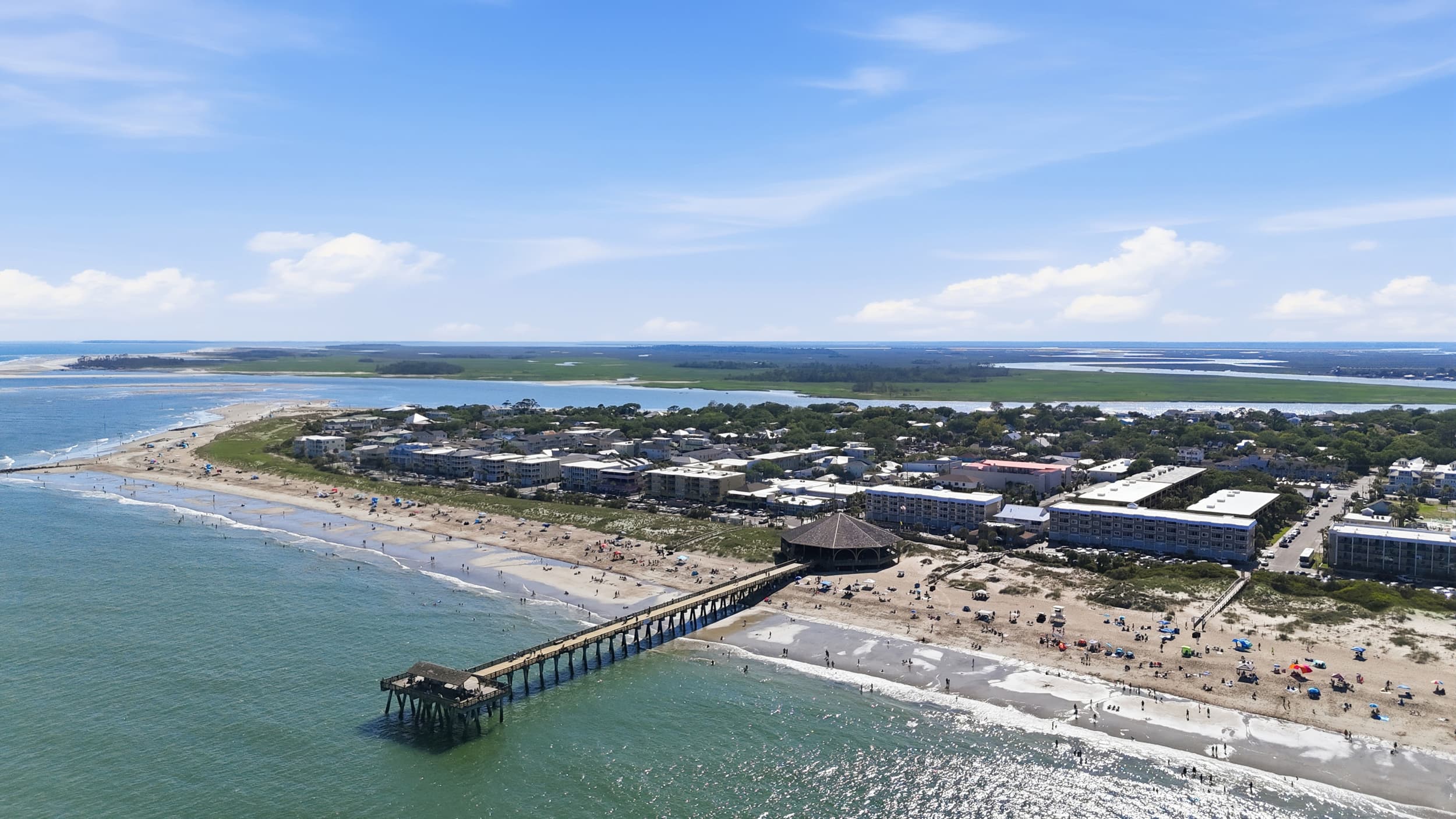
Ask when to visit Tybee and you'll get the stock answer: come in spring or fall, skip the summer crush, avoid winter unless you like an empty beach. It's not wrong. It's just vaguer than it needs to be, because the two shoulders of Tybee's year are not the same, and the difference is measurable.
NOAA runs a continuous water-temperature gauge at Fort Pulaski, just behind the island. Averaged over seven years of hourly readings, October's water comes out at 73.8°F. April's comes out at 67.8°F. Six degrees. The ocean spends all summer banking heat and spends the fall giving it back slowly, so autumn, not spring, is the warm shoulder of Tybee's year. That one fact reorganizes the whole when-should-we-go conversation, and it's the spine of this guide.
What follows is the full year, month by month: the water, the air, the daylight, and what the island actually feels like in each stretch. If you're still deciding whether Tybee is your kind of beach town at all, start with our first-timer's guide and come back here to pick the dates.
The numbers this guide runs on
Two NOAA sources do the work. Water temperatures come from the gauge at Fort Pulaski, the closest continuous official station to the beach, averaged over seven years of hourly readings. Air temperatures come from daily observations at that same station, which matter more than the widely quoted Savannah airport normals: the island's nights run several degrees warmer than the airport's and its days a few degrees cooler, because the ocean moderates everything. Where we cite rainfall, that's from the official 1991–2020 climate normals for the Savannah area.
One caveat worth carrying: the gauge sits in the river entrance behind the island, not in the surf off the beach. It's a good proxy, not a dipstick for the exact wave you'll wade into.
| Month | Water °F (7-year mean) | Island avg high / low °F |
|---|---|---|
| January | 54.0 | 58.7 / 45.9 |
| February | 55.2 | 62.7 / 50.5 |
| March | 61.2 | 68.2 / 56.3 |
| April | 67.8 | 73.4 / 62.3 |
| May | 75.2 | 79.5 / 69.6 |
| June | 81.0 | 84.6 / 75.1 |
| July | 85.0 | 88.0 / 78.0 |
| August | 84.6 | 86.4 / 77.3 |
| September | 80.9 | 82.1 / 73.5 |
| October | 73.8 | 75.2 / 65.6 |
| November | 65.2 | 67.5 / 55.9 |
| December | 58.0 | 61.1 / 49.1 |
Now, the year itself.
January and February: the quiet floor
January
The coldest water of the year, 54°F, and the island at its stillest. Days average in the upper 50s, nights in the mid 40s. This is walking weather, not swimming weather, and January rewards the visitor who wants the beach as scenery: long empty stretches of sand, birds working the tide line, and nobody between you and the horizon. The lighthouse and the Marine Science Center run year-round (both closed Tuesdays), and Savannah sits about half an hour away when you want a city day.
February
Still winter, barely. The water creeps to 55°F and afternoon highs start touching the low 60s, which on a sunny, windless day feels genuinely pleasant on the sand. February keeps January's quiet. One winter note that applies to both months: some places on the island go to a shorter week outside of summer, so check hours before you drive across the island for a specific meal or shop.
March through May: the air turns first
March
Spring on Tybee arrives out of order. The air warms first, with island highs averaging 68°F and the first properly warm weekends landing this month. The water is not fooled: 61°F, cold enough that a wade to the ankles is the honest limit for most. March is a fine month for the things that don't require getting in, which on Tybee is most things. Our things-to-do rundown covers the full list.
April
The trap month, and worth naming as one. April looks like beach season in photos: highs in the low-to-mid 70s, blue sky, warm sand. But the mean water temperature is 67.8°F, which is a bracing plunge rather than a swim. By late in the month the water is climbing through the upper 60s and hardy swimmers do get in. Most people wait for May and are glad they did. Come in April for the weather and the walking, not the swimming, and you'll have a great trip. Come expecting July's ocean and you'll stand at the waterline reconsidering.
May
The real opening. Water hits a monthly mean of 75.2°F, the first genuinely swimmable figure of the year, while island highs sit just under 80 and nights hover near 70. Sea-turtle nesting season begins in May and runs through October, so give any marked nests on the beach a wide berth. If spring is your season, this is its best month by a comfortable margin: summer's water without summer's density.
June through August: peak everything
June
Summer arrives whole. The water jumps to 81°F, island highs reach the mid 80s, and nights stop dropping below the mid 70s. June is also the rainiest month of the year in the official normals, at 6.65 inches, though most of that falls as afternoon thunderstorms that build, crack, and clear inside an hour or two. The compensation is light: around the solstice the sun doesn't set until 8:33 PM, the longest evenings of the island's year. Hurricane season officially opens June 1, but the season's heart comes later, as we'll get to in September.
July
Peak in every column. The warmest water of the year at 85°F, the hottest days at an average high of 88, the biggest crowds, and the island's marquee event: the fireworks over the pier on the Fourth, which we've covered in a full guide. Know the parking math before you come. Tybee's paid parking runs $4 an hour, enforced citywide from 8 AM to 8 PM every day of the year, paid through the Park TYB app. In July the price isn't the problem, the finding is. A place to stay with its own lot earns its keep this month, ours included.
August
Statistically a half-step off July: water at 84.6°F, average highs of 86, the humidity still thick, 5.46 inches of rain in the normals. Early August is functionally identical to July. Late August starts to loosen as school schedules pull families home, and you can feel the island's pace ease before the calendar admits it. The ocean, meanwhile, is still at its warmest. If you want peak-summer water without peak-summer competition for it, the last week of August is a quiet bargain of a window.
September and October: the warm shoulder
September
The turn. Water averages 80.9°F across the month, typically 82–83°F in the first week and 79–80°F by the last, while days settle into the low 80s and nights into the low 70s. That's a couple of degrees off high summer, not a change of season, and the beach days are still full-length.
Honesty requires the other half: September 10 is the statistical peak of the Atlantic hurricane season, with most activity falling between mid-August and mid-October per the National Hurricane Center's climatology. Most Septembers here pass with nothing more tropical than a thunderstorm, and the sensible play is to book normally and watch the NHC map as your dates approach. We've written a longer, sourced look at the actual odds if you want the full picture.
October
The month this guide exists to defend. The water averages 73.8°F, which is a real swimming temperature, and here's the comparison that surprises people: that's about six degrees warmer than April, the month everyone assumes is its mirror. Lifeguards are still on duty daily through October 31. The Monday-evening farmers market at the lighthouse runs into October. The catch is daylight, because the island loses evening light fast in fall: sunset is around 7:09 PM as October begins and 6:51 PM by mid-month, so take the beach walk before dinner rather than after.
By late October the air and the water have traded places. The island's average low drops to about 65°F while the ocean still holds near 74, meaning the water is warmer than the evening you'll dry off into. That gap is exactly what a heated pool answers, and our saltwater pool is heated through the cooler months, which stretches the swimming day well past what the beach alone allows.
November
The window closes. Water falls to 65.2°F, done for the year for all but wetsuit people, and days average in the upper 60s. What November offers instead is the driest month on the calendar, at 2.39 inches in the normals, which makes it quietly excellent for walkers, photographers, and anyone using Tybee as a calm base for Savannah. The sunsets over the back river don't take the winter off either, and our guide to the island's sunset spots works in any month.
December: the long exhale
Water at 58°F, days averaging 61, the island at low idle. December is for the same traveler as January: beach walks in a jacket, unhurried meals, day trips into Savannah about half an hour away. It's the stretch of year when the island most belongs to the people on it. Everything in the winter notes above applies, including the one that surprises people: parking is still $4 an hour, still enforced 8 AM to 8 PM citywide. The off-season discount is availability, not price.
Three calendar mistakes to avoid
- Treating April like a swim month. It swims like early spring, whatever the air is doing. If getting in the ocean is the point of the trip, May is the earliest honest answer.
- Waiting for spring when fall is warmer. If you missed summer and you're choosing between an October trip now and an April trip later, October wins on water by about six degrees. This is the single most useful thing the gauge data says.
- Assuming winter parking is free. It isn't, anywhere on the island, any month. Budget for it or stay somewhere with a lot.
So when should you come?
Different trips want different months, so here's the honest matching:
- Swimming is the point: mid-May through early October, with the water at its absolute warmest in July and August.
- Beach trip without the density: May or the last week of August on the front end of summer, September and October on the back end. October is our overall pick for the reasons above.
- Family summer vacation: June through August, eyes open about heat, afternoon storms, and parking. The island is built for it, just full.
- Walkers, photographers, and Savannah pairings: November through March, when the island is quietest and the light is low and good.
Whenever you land, the logistics don't change much: it's about half an hour to downtown Savannah, the lighthouse and Marine Science Center run year-round with Tuesday closures, and you'll want a car to get here. Our dining page covers where to eat in any season.
One last note on where we sit in all this. The inn is a block off the beach, parking is free on site, and the saltwater pool is the piece that changes the calendar math, because it's heated through the cooler months. If your dates land in that October-through-April stretch where the ocean gets less inviting, the rooms come with a warm swim anyway. Multi-night stays carry a discount year-round through our standing offers.
Planning the trip? Pick the month that fits, then check availability. The island will be here in all twelve.
FAQ
Common questions.
What is the best month to visit Tybee Island?
October, with May right behind it. October's water averages about 74°F at the NOAA gauge just behind the island, roughly six degrees warmer than April's, and lifeguards are still on duty daily through October 31. May is the spring equivalent: water around 75°F, island highs just under 80, and the summer crowds not yet arrived. Both months give you swimmable water without peak-season congestion.
When is the ocean warm enough to swim at Tybee Island?
Mid-May through October for most people. Monthly means at NOAA's Fort Pulaski gauge, averaged over seven years, run 75°F in May, 81 to 85°F from June through September, and about 74°F in October. November drops to 65°F, which ends the season for all but the hardiest. Winter water sits in the 50s.
Is Tybee Island worth visiting in the winter?
If you want the beach to walk rather than swim, yes. December through February is the island's quietest stretch, with daytime highs in the upper 50s to low 60s and water in the 50s. The lighthouse and the Marine Science Center stay open year-round (both are closed Tuesdays), and Savannah is about half an hour away for day trips. Note that paid parking is enforced citywide year-round, so winter doesn't make it free, just easier to find.
When is hurricane season at Tybee Island?
The Atlantic hurricane season runs June 1 through November 30, and the statistical peak is September 10, with most activity between mid-August and mid-October per the National Hurricane Center. Most visits in those months pass without any tropical weather at all. The sensible approach is to book normally and glance at the NHC map as your dates approach.
What is the rainiest month on Tybee Island?
June, by the official 1991–2020 climate normals for the Savannah area, at 6.65 inches, with July and August close behind. November is the driest month at 2.39 inches. Summer rain mostly arrives as afternoon thunderstorms that pass through, not washed-out days.
Planning a trip to Tybee?
We’re one block from the beach and one block from the pier.
Check Availability